
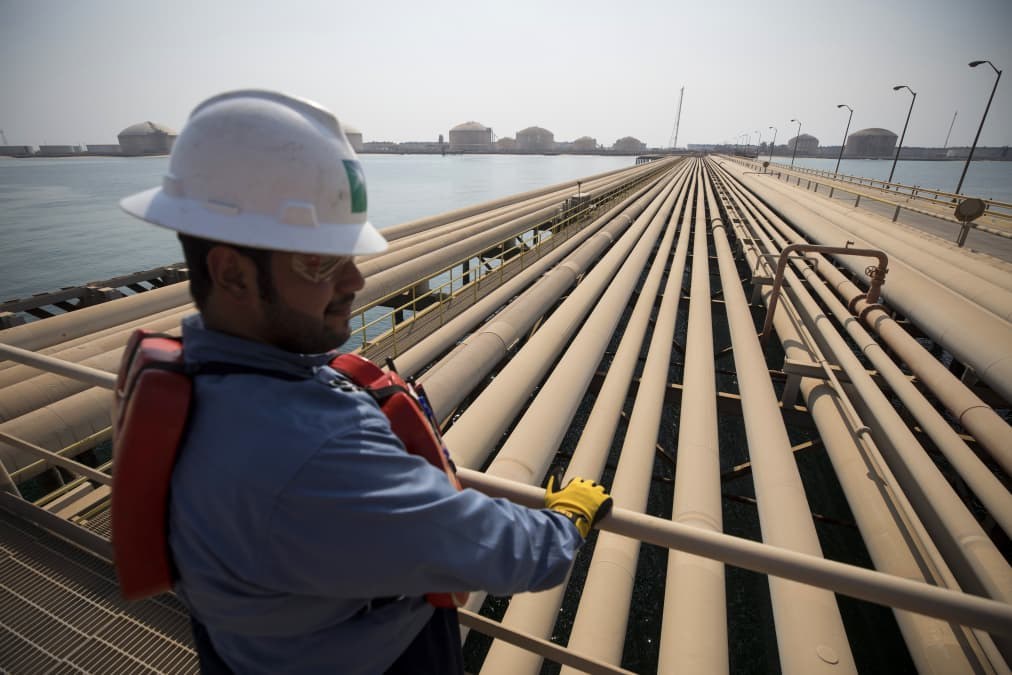
Crude oil prices popped on Monday after Saudi Arabia closed its critical pipeline that bypasses the Strait of Hormuz.
U.S. West Texas Intermediate futures were up 3% to $103.14 per barrel by 7:43 a.m. ET. Brent crude, the international benchmark, traded 3.46% higher to $108.23 per barrel. Prices gained about 9% last week as fighting escalated between the U.S. and Iran.
Drones launched from Iraq damaged the East-West pipeline on Thursday, forcing the Saudi government to close the key crude oil artery. Riyadh has not disclosed how badly the pipeline is damaged or how long it will remain shut.
"The relatively contained price reaction suggests the market still expects Saudi inventories to cushion exports in the near term, but if the disruption extends beyond the five-to-seven-day inventory cushion, that could change quickly," said Janiv Shah, an oil market analyst at Rystad Energy, in a Monday note.
A diplomatic meeting between Iran and the Gulf Arab states to discuss the situation in Hormuz, originally scheduled to take place Monday in Oman, was abruptly postponed after the pipeline attack.
"In the interests of consensus the regional meeting set for tomorrow in Salalah has been postponed," Oman's Foreign Minister Badr Albusaidi said Sunday in a social media post. "We remain committed to fostering dialogue that supports stability and lasting cooperation in our region."
The security situation in Hormuz remains precarious with another tanker coming under attack Sunday resulting in a severe fire onboard, according to the United Kingdom Maritime Trade Operations Center.
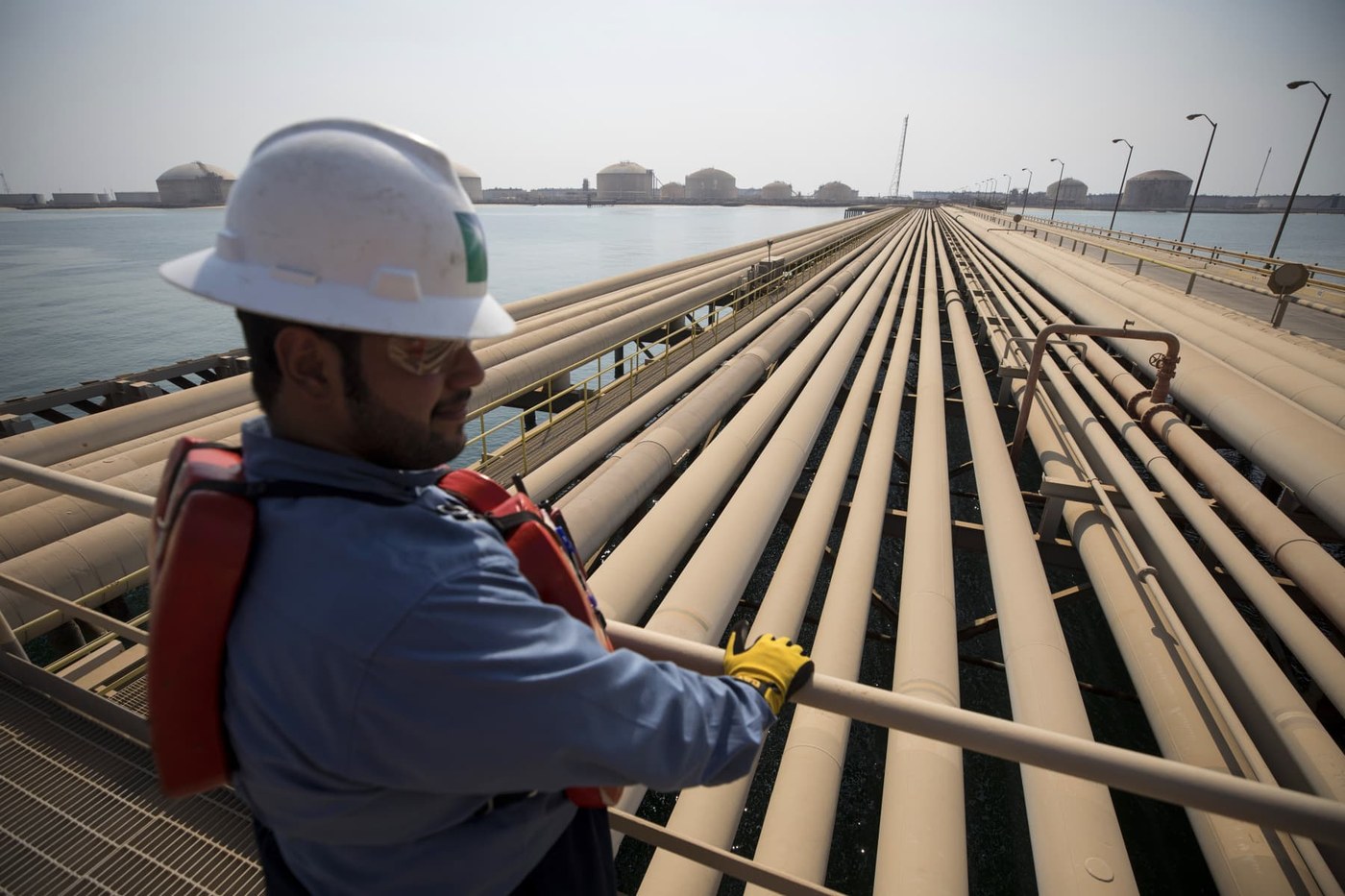
The Saudi pipeline, which can carry 7 million barrels per day, has played a key role in easing the severe oil supply disruption triggered by the Iran war. It spans the kingdom from East to West, connecting its oil producing regions near the Persian Gulf to export terminals on its Red Sea coast.
The Saudis have relied on the pipeline to shift crude oil exports away from the Gulf as the Iran and the U.S. battle for control over the Strait of Hormuz. The pipeline has played a more important role in stabilizing oil markets than the massive release of strategic reserves led by the United States, Saudi Aramco CEO Amin Nasser said on the company's August earnings call.
Crude oil loaded for export at Saudi's Red Sea port of Yanbu averaged 2.6 million bpd over the last seven days, Rystad's Shah said. This is the volume at risk if the pipeline remains closed and the limited crude stored at the port runs out, the analyst said.
Saudi Arabia has faced escalating attacks from Iran-allied militant groups in recent days. Houthi militants in Yemen struck energy facilities and other civilian assets in the kingdom early last week injuring more than 70 people, according to Saudi state media.
The Houthis have reportedly seized the strategic Perim Island in the Bab el-Mandeb Strait after taking the port city of Mokha on Yemen's Western coast. The advances would give the militants a stronger position to disrupt oil flows through the Bab el-Mandeb, which connects the southern Red Sea to global markets.
The Houthis declared a maritime embargo of Saudi Arabia in July.