
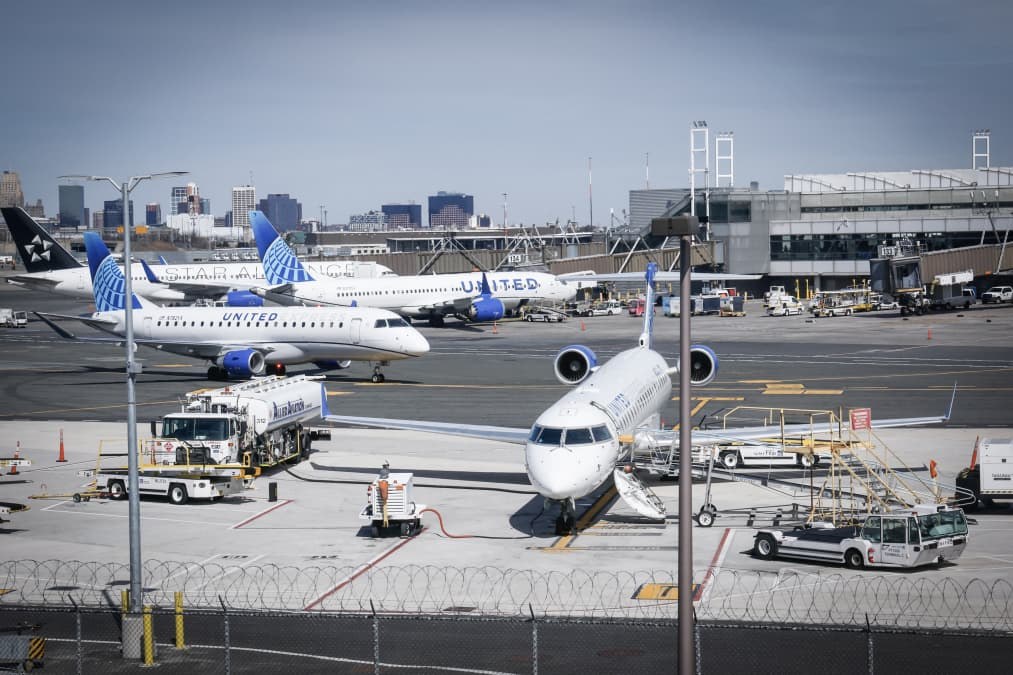
An equipment outage on Monday delayed hundreds of flights bound for Newark, New Jersey, and Philadelphia and forced close to 70 planes to divert to other airports. As of 1 p.m. ET, the disruptions had spread to New York City, where flights into LaGuardia Airport and John F. Kennedy International Airport were also halted by the Federal Aviation Administration.
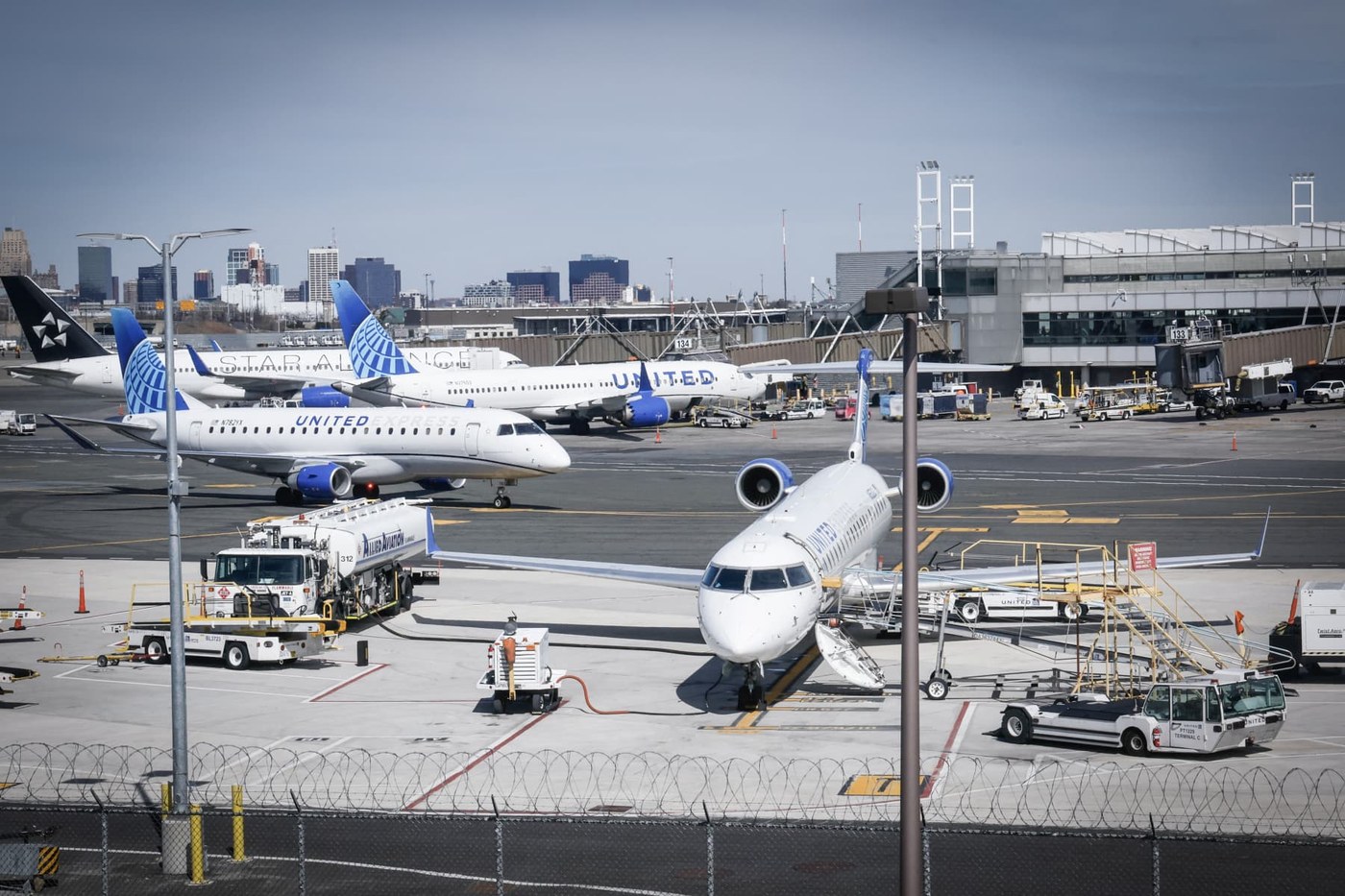
The FAA earlier halted flights into Newark Liberty International Airport, United Airlines' busiest international hub, as well as Philadelphia International Airport and New Jersey's Teterboro Airport "due to issues with some frequencies at Philadelphia TRACON."
That Terminal Radar Approach Control, or TRACON, facility, guides planes in and out of Newark and Philadelphia.
United waived flight change fees for travelers affected by the disruption.
Roughly 250 flights in and out of Newark were delayed, more than a fifth of the day's schedule, according to FlightAware.
As of about 1 p.m. ET, 67 flights bound for Newark were forced to divert, according to Flightradar24, including international flights from Iceland, Egypt, Greece, Spain and France.
A United flight from Berlin diverted to Detroit Metropolitan Wayne County Airport, while an SAS flight from Stockholm bound for Newark was sent to Washington Dulles International Airport.
Aging air traffic control equipment and technology issues have vexed airline executives for years. The Trump administration last year announced a multibillion-dollar overhaul of U.S. air traffic control equipment and resources.
On Monday, the Transportation Department and FAA unveiled a new artificial intelligence-powered tool meant to analyze data to minimize flight delays, rolling it out first in Washington, D.C.