
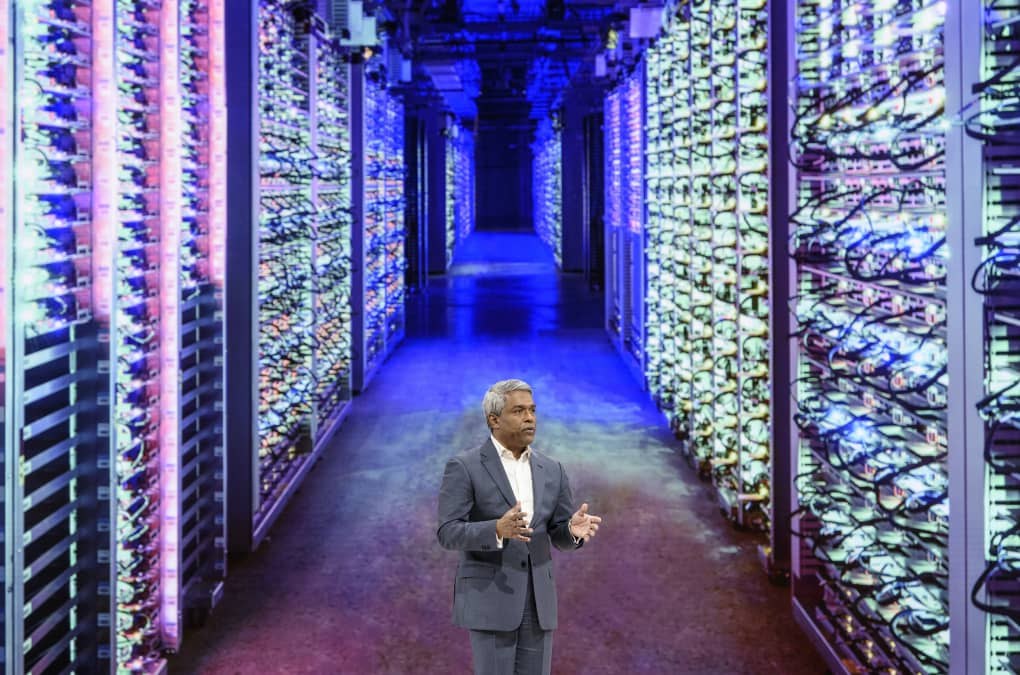
Google has spent years pitching customers on the advantage of buying its chips, models and cloud services in one place, offering a full stack that rivals Amazon and Microsoft have tried to replicate.
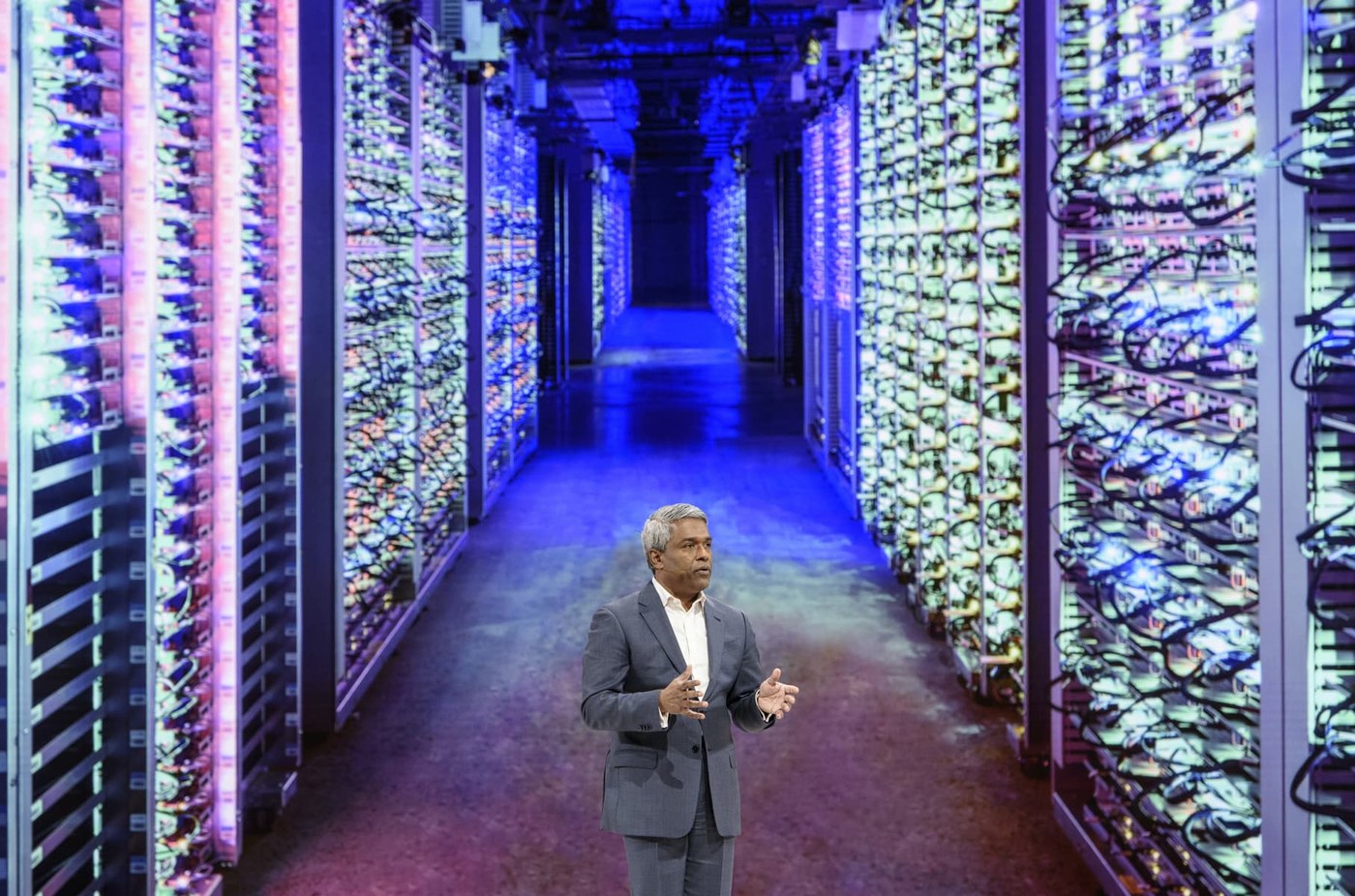
Now, the company is pushing its equipment outside of its own walls to reach more customers and build a bigger business around artificial intelligence chips, a market that Nvidia has dominated.
A day ahead of its third-quarter earnings report, Alphabet said Tuesday that Oracle will offer Google's tensor processing units, or TPUs, the custom chips the internet giant has been developing since 2013. It's the first time customers will be able to access TPUs outside of Google's infrastructure, and shows that cloud boss Thomas Kurian, who previously spent more than 20 years at Oracle, is looking elsewhere for growth.
"They're a very strong competitor, and it's very possible that they could eventually take market share from Nvidia," said Chris Ballard, managing director of Check Capital Management, referring to Google's position in chips.
Kurian, who joined Google in late 2018, is operating from a position of strength. Analysts expect Google Cloud revenue to jump about 90% from a year earlier, after growing 82% in the second quarter, with TPUs contributing to its momentum.
"Google was great at doing its own thing, but it was never able to serve customers," said Uday Cheruvu, a portfolio manager at Harding Loevner, which owns Alphabet shares. "That mindset has changed."
Google opened up TPUs to outside data centers in the second quarter, before this week's announcement with Oracle.
Estimates for the TPU business vary widely, but they all point to significant growth. TD Cowen models $9.4 billion in TPU sales for the second half of this year and $62.5 billion for 2027. Wells Fargo expects about $9 billion in third-quarter sales and $99 billion next year.
CFO Anat Ashkenazi said on the last earnings call in July that only a small portion of TPU revenue from existing agreements will be recognized this year, with the "vast majority" coming in 2027. She also said Google planned to use more outside capacity in the third quarter while the company builds out its own infrastructure.
With $25 billion in second-quarter cloud revenue, Google trailed Amazon Web Services at $42 billion and Microsoft Azure at $29 billion.
"It's almost like the bigger the pie is getting, the faster they're accelerating into it," said Ballard, whose firm owned about $236 million in Alphabet stock as of June 30.
'Optimize the whole stack'
While Kurian aims to get more TPUs into the market by turning to outside partners, he has to balance the benefits of building the customer base with his company's own technology needs.
At a Goldman Sachs conference in September, Kurian said Google's AI servers pay for themselves in under two years, and servers running its own silicon reach payback in roughly half that time.
"It's because we can optimize that whole stack," Kurian said.
Industry research firm SemiAnalysis estimates that Google's latest Ironwood TPU costs about 44% less to own and operate than an Nvidia GB200 server.
There's also the margin hit that comes with external TPU sales. TD Cowen estimates a 20% operating margin on TPU sales, compared with an overall cloud margin of about 35% last quarter. Cheruvu said he doesn't think Google's cloud operating margin could widen much beyond the mid-30s.
Google's biggest TPU customer is one of its top AI competitors.
Anthropic, whose Claude models compete with Gemini, agreed last October to use up to 1 million TPUs in a deal worth tens of billions of dollars. Mizuho says that agreement brings nearly a gigawatt of capacity online this year and describes the relationship as Google "arming its closest model competitor."
OpenAI is also planning to buy TPUs from Google, CNBC confirmed after The Information first reported on the ChatGPT maker's intentions on Tuesday.
Anthropic is getting outside help to finance its Google silicon. This week, Broadcom, which works with Google on TPUs, detailed a $63 billion vehicle backed by Blackstone and three big banks that will buy TPUs and networking gear from Broadcom and lease them to Anthropic for five years. According to analysts from William Blair, the financing plan covers about half of Anthropic's 2027 needs, which suggests more financing is coming.
In its initial public offering filing on Monday, Anthropic said it uses silicon from Google, Amazon, Nvidia and Advanced Micro Devices, allowing the company to "select chips based on the best price-performance and efficiency characteristics for each workload."
Regarding Google and Broadcom, Anthropic said the partnerships "provide us with access to compute capacity powered by Google TPUs across multiple generations of the TPU platform."
WATCH: Gemini product chief details weeks of company-wide testing ahead of Gemini 4 Argon launch