
Trading desks and automated liquidity providers are pulling back balance-sheet allocations as geopolitical shocks and macro headwinds test market plumbing. A deadly weekend strike on the international airport in the Saudi Arabian capital, which claimed 12 lives and left more than 300 people injured, has introduced acute headline risk, compounded by political considerations regarding renewed military strikes against Iran. Coupled with shifts in global diesel supply routes and diplomatic friction surrounding eastern European supply chains, the immediate consequence for secondary trading venues has been a sharp elevation in inventory holding costs and a widening of quoted bid-ask spreads.
Geopolitical Escalation and Defensive Capital Allocation
The retrenchment in dealer liquidity coincides with worsening sovereign financing conditions highlighted on the international stage. Multilateral warnings indicate that developing economies face a punishing triple shock from energy pressures, El Niño disruptions, and soaring borrowing costs. For institutional trading desks operating across fixed-income and cross-border execution venues, elevated sovereign yields increase the hurdle rate for carrying risk-off inventory. Dealers have responded by curtailing their uncommitted quotes, prioritising balance-sheet preservation over aggressive price discovery in non-core instruments.
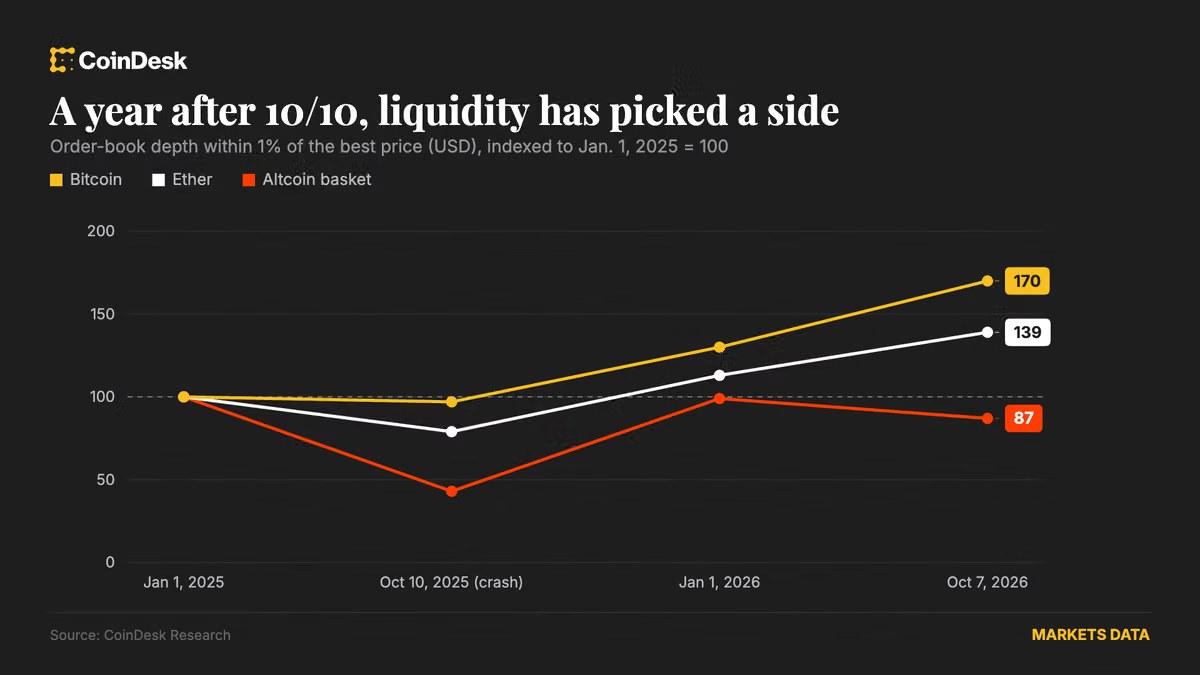
This selective liquidity provision is producing marked divergences in underlying order-book depth. Even within alternative asset markets, capital is consolidating strictly around senior instruments. One year on from a major October flash crash, order books for primary digital assets such as bitcoin and ether have rebuilt their depth above pre-crash levels, whereas liquidity across secondary tokens continues to erode alongside spot volumes that remain far beneath their previous peak. Market makers are demonstrating an identical discipline across traditional cash equities, rationing depth outside primary liquidity pools and demanding wider premia to warehouse single-stock risk.
Order-Book Divergence and Operational Safeguards
Against this volatile macroeconomic backdrop, scheduled corporate insider flows and event-driven equities continue to navigate secondary market channels. Pre-programmed executions remain an essential mechanism for managing market impact during thin liquidity windows; regulatory disclosures confirmed that a trust associated with enterprise software provider Snowflake disposed of 50,000 shares under a Rule 10b5-1 trading plan established in April. Elsewhere, clinical developments drove significant single-stock divergence, with biotechnology firm Grail reaching a twelve-month high following a favourable regulatory panel vote, even as market participants weigh downside risks concerning long-term insurer adoption. Executive compensation adjustments also continued apace, including Vogenx granting 155,000 stock options to its chief executive.
Simultaneously, execution infrastructure faces recurring non-financial headwinds that threaten operational continuity. Trading firms have been alerted to an exponential surge in calendar-based phishing scams designed to compromise administrative and client credentials through deceptive appointment notifications. Under regulatory standards prioritising operational resilience and venue integrity, market participants are having to reinforce internal access controls to ensure trade routing and settlement gateways remain fully insulated from credential theft during periods of elevated trading strain.
With energy shocks resurfacing and borrowing costs challenging global debt structures, trading desks are adopting an unmistakably defensive posture. Until geopolitical tensions de-escalate and broader funding pressures ease, order books across multi-asset venues are expected to remain thin, with market makers keeping risk inventory tightly constrained.