
- Published
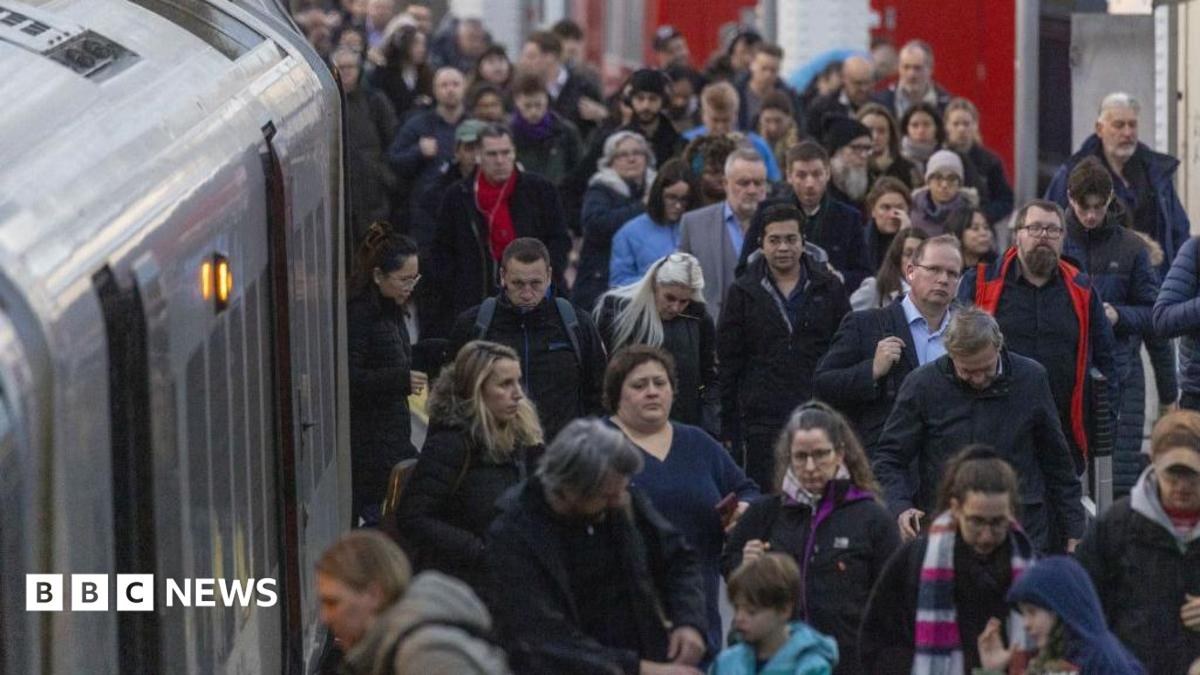
The most overcrowded train service in England and Wales last autumn was a Thameslink morning rush hour service between Bedford and Three Bridges in West Sussex, according to the Department for Transport (DfT).
Second on the list was a West Midlands service from London Euston to Crewe, Cheshire, departing at 17:46, the government figures reveal.
Overall, they show overcrowding on commuter trains serving major English and Welsh cities fell slightly, for the first time since 2020, due to an increase in capacity.
Only 1.1% of peak-time travellers were on an overcrowded train, the DfT said. More than 1.2 million of the average 1.9 million journeys on a typical autumn day were in London.
The DfT says work is under way to improve capacity where there are pinch points during peak hours.
The Thameslink service which topped the list had a "load factor" â meaning how full the train was â of 176% at London St Pancras shortly after 08:00.
The West Midlands service to Crewe had a load factor of 170%. It was busiest when it departed Euston.
The third most crowded train was a Transport for Wales service from Bridgend to Rhymney, with a load factor of 161%. It was busiest at Llanishen.
Four of the top ten services were operated by South Western, and Thameslink appeared twice more.
The 10 most jam-packed services (load factor and busiest time)
-
Thameslink: Bedford to Three Bridges via London St Pancras (176% at 08:09)
-
West Midlands: London Euston to Crewe (170% at 17:46)
-
Transport for Wales: Bridgend to Rhymney via Llanishen (161% at 16:45)
-
South Western: Alton to London Waterloo (159% at 08:22)
-
Thameslink: Bedford to Three Bridges via London St Pancras (155% at 08:24)
-
South Western: Fareham to London Waterloo via Vauxhall (151% at 08:19)
-
Thameslink: Epsom to London Bridge (150% at 08:28)
-
South Western: Portsmouth Harbour to London Waterloo via Vauxhall (149% at 08:27)
-
South Western: London Waterloo to Basingstoke via Vauxhall (147% at 17:50)
-
West Midlands: London Euston to Birmingham New Street (146% at 17:56)
The DfT figures were based on passenger counts taken on Tuesdays, Wednesdays and Thursdays between September and December 2025, and represent travel on a typical autumn weekday.
Overcrowding fell slightly overall compared with autumn 2024, with an average of 16,800 (1%) passengers a day travelling in excess of capacity.
The DfT said seating capacity has grown 4% in the past year.
A spokesperson said: "The vast majority of passengers â 98.9% â typically travel on services that are not overcrowded.
"Where there are pinch points during peak hours, work is under way to improve capacity. GTR has added carriages to its busiest commuter services, while South Western Railway has boosted capacity by nearly 30% in the last year with new trains.
"Bringing track and train together under Great British Railways will support further improvements, helping create a joined-up service that puts passengers first."
A quarter of passengers travelling in and out of London at peak times had to stand. But in other cities, only 5% of passengers could not get a seat.
A Thameslink spokesperson said its trains were designed to have ample standing room on board its busiest commuter routes.
"We are always monitoring how busy our services are and continually make changes to provide more space.
"In the last few years alone, we've lengthened trains on some of our busiest Bedford to London services and introduced an additional peak-time service to provide more choice and extra space."
Related topics
-
- Published6 days ago
-
- Published30 June