
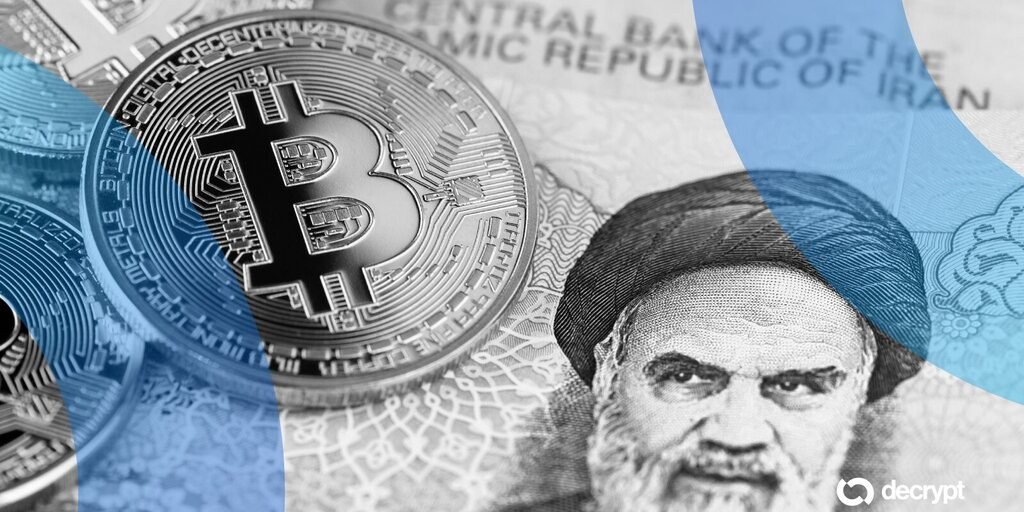
OFAC has designated BitBank, an Iranian exchange controlled by financier Babak Zanjani.
Treasury says Zanjani used it to move hundreds of millions in Bitcoin to the IRGC between June and July.
The Hormuz toll authority has been routing its payments through the exchange since June.
The U.S. Treasury hassanctioned BitBank, naming the Iranian exchange it says carried the Bitcoin that shipping companies paid for safe passage through the Strait of Hormuz.
Since June, the Office of Foreign Assets Control said, theHormuz Safe Marine Services Authority has used BitBank to pass the payments it collects on to the Iranian regime. That authority was the bodycharging vessels in Bitcoin for transit rights, a scheme Treasury designated in July.
Today, as part of Operation Economic Outcast, the Department of the Treasury’s Office of Foreign Assets Control (OFAC) designated key components of the Iranian regime’s digital assets-based sanctions evasion infrastructure. Targets include BitBank, a priority digital assets…
Between June and July, Treasury says, BitBank was used to move "hundreds of millions of dollars' worth of Bitcoin" to the Islamic Revolutionary Guard Corps.
BitBank is controlled by Babak Zanjani, an Iranian financier OFACdesignated in January. Sentenced to death in Iran in 2016 for embezzling from the National Iranian Oil Company, he had his sentence commuted in 2024 and resurfaced last year backing regime-linked ventures. Treasury says he has been advertising BitBank on his social media accounts since at least 2024.
The action also covers Pishtaz Simorgh Electronic Trade Company, which built BitBank's software and is a subsidiary of the already-designated Dot One Value Creation Group, along with three Dot One executives: Hossein Ali Zaker Hossein, Mohammad Mahdi Zaker Hossein and Seyed Adel Heidari.
Treasury describes the first as involved in most of Zanjani's sanctions evasion, including oil exports, and says he has brokered digital asset transactions that ended up with the IRGC.
All five were designated under Executive Order 13902, which the administrationextended in August to cover anyone operating in Iran's digital asset sector. It is the authority Treasury has been using since to work through the network, including the crypto exchanges itdesignated for laundering Iranian funds.
"Efforts to finance the Iranian regime using cryptocurrencies are not beyond OFAC's reach," said Treasury Secretary Scott Bessent. "If you support the Iranian regime, the Department of the Treasury will sanction you."
The designations fall under Operation Economic Outcast, the campaign Bessent announced on August 24 and dubbed Economic D-Day, which Treasury says is aimed at severing Iran's remaining economic lifelines with help from the EU, the UK and Gulf partners.
U.S. assets belonging to the five are blocked, as are any entities they own half or more of, and non-U.S. firms dealing with them risk secondary sanctions.
Traders do not expect the pressure to lift soon. On Myriad, a prediction market developed by Decrypt's parent company Dastan, the odds of Washingtonannouncing an end to its naval blockade of Iranian shipping by September 30 have fallen to 10%, down 30 points. Even a December 31 deadline is only a 60% shot.
Start every day with the top news stories right now, plus original features, a podcast, videos and more.