
- Data Center Construction
- Data Center Site Selection
- Operations & Management
- Sustainability
- Industry Trends
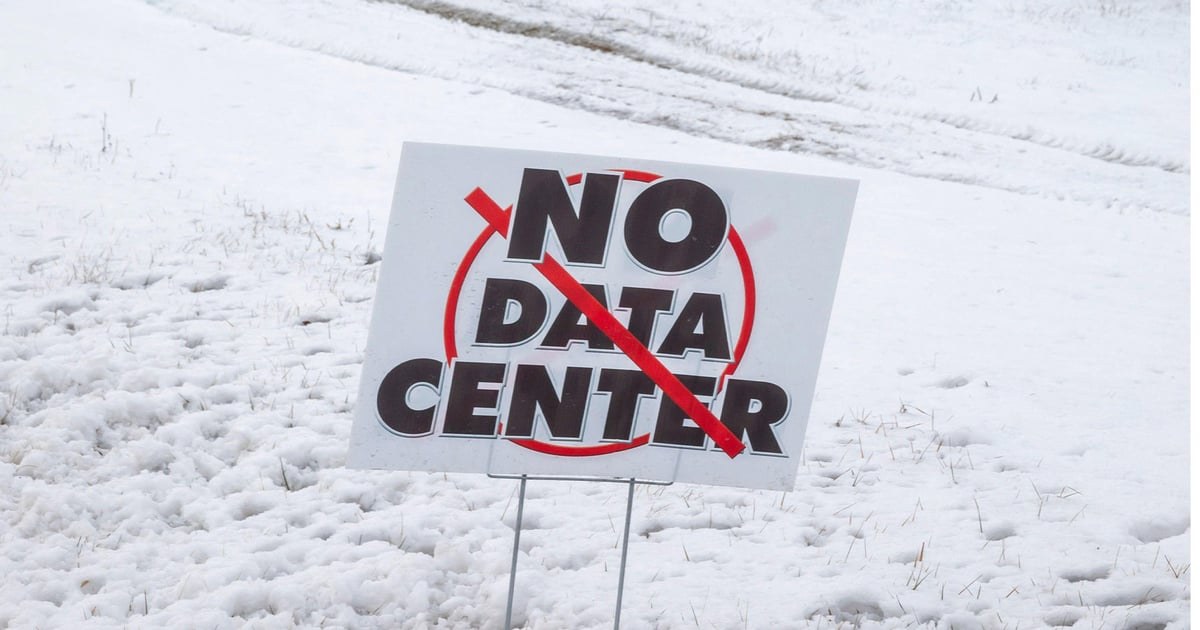
Community protests against data center construction are growing rapidly, halting billions in projects and reshaping industry strategies.
Community protests against data center construction are no longer isolated incidents – they are a growing, organized movement reshaping the industry’s future.
According to Data Center Watch, $18 billion in data center projects have been successfully halted, and another $46 billion has been delayed over the past two years due to opposition from residents and activist groups.
While some of this opposition can be labeled as ‘NIMBY’ (‘not in my backyard’), a significant portion reflects broader concerns.
“As well as NIMBY resistance, there is a ‘NOTE’ – ‘not over there, either’ – backlash in some areas,” said Chris Crosby, CEO of Compass Datacenters.
Data Center Watch has identified at least 142 activist groups across 24 states actively working to block data center construction and expansion in their regions.
As a result, numerous projects have been abandoned or indefinitely postponed, highlighting the growing need for developers to address community concerns and adopt more sustainable, transparent practices to secure project approvals.
Protesters picket DTE Energy, opposing the electric utility’s plan to provide power for a proposed $7 billion data center in rural Michigan. (Image: Alamy)
Canceled or Postponed Data Center Projects
Community opposition has led to the cancellation or scaling back of several high-profile data center projects across the US.
Concerns about environmental impact, strain on local resources, and property values have been at the forefront of these protests.
In some cases, developers have withdrawn proposals entirely, while others have been forced to significantly alter their plans to address community objections.
Below are examples of projects that have been canceled or postponed due to these challenges:
-
Tract: Two projects ($14 billion) in Arizona, each exceeding 1 GW, were withdrawn after opponents raised concerns about building height, noise pollution, and strain on local resources.
-
Diode Ventures: A $1.5 billion proposal in Peculiar, Missouri was blocked following protests about visual impact, noise, and effects on property values.
-
Provident Realty Advisors: A $1.3 billion, 200 MW data center project in Chesterton, Indiana was canceled due to resident concerns about air quality, water resources, wildlife, and property values.
-
DC Blox: A $500 million project in Richmond, Virginia was scaled back from 195,000 square feet to 65,000 square feet and relocated to avoid rezoning issues. It is awaiting local approval.
-
Headwaters Site Development: A $400 million plan to rezone 67 acres in Fauquier County, Virginia was withdrawn after locals rallied around concerns about noise, water, power demands, and environmental conservation.
-
Roundhouse Digital Infrastructure: A $100 million facility in Cascade Locks, Oregon was canceled after residents recalled local officials who had approved the project, citing fears of rising utility rates and doubts about developer credibility.
-
Fife Lake Project: A proposed data center in Michigan was scrapped due to local opposition.
-
Balico: A 300 MW project in Mill Creek, Virginia was canceled.
Delayed Data Center Projects
In addition to canceled or postponed data center projects, community action has resulted in the delay of numerous developments.
Legal challenges, rezoning issues, and opposition from newly elected officials have slowed progress on several large-scale projects. While some have gained initial approvals, they face significant hurdles before construction can begin. These projects are highlighted here:
-
QTS & Compass Datacenters: A $24.7 billion, 2.4 GW project in Prince William, Virginia faces legal challenges.
-
Culpeper Acquisitions: A $12 billion project in Culpeper County, Virginia is stalled due to rezoning issues for its 426-acre site.
-
Amazon: A $6 billion project in King George, Virginia is being contested by a newly elected and largely hostile Board of Supervisors.
-
Province Group: A $3 billion, 300 MW project in Midlothian, Virginia is approved but faces strong opposition.
-
Starwood Capital Group: A $165 million project in Alexandria, Virginia has progressed through approvals but requires Dominion Energy to build a new substation and transmission lines.
-
Amazon: After its proposed 220,000-square-foot data center campus in Warrenton, Virginia was approved, every town council member who supported it lost re-election, and several lawsuits are pending.
-
Amazon: The Ashton data center proposal in Manassas, Virginia faces community pushback over plans to build near homes and schools, with noise and wildlife concerns currently blocking progress.
-
WUSF 5 Rock Creek East: A $750 million project in Fort Worth, Texas gained rezoning approval but faces legal challenges related to city water regulations.
-
GI Partners: A $79 million four-story data center in Santa Clara, California has been approved, but local opposition has delayed construction by six months.
-
Provident Realty Advisors: A data center proposal in Burns Harbor, Indiana has been withdrawn, with uncertainty about whether it will be resubmitted.
Cancellations are Expected
Cancellations are to be expected in the data center industry. According to John O’Brien, an analyst with Uptime Intelligence, approximately half of all announced data center projects either never materialize, or construction is far slower than expected. This has been the case for years. However, the massive scale of AI data center projects and the intensity of opposition have brought greater attention to postponements.
It remains to be seen if the percentage of cancellations declines in the long term. Uptime Intelligence’s expectation is that 50% of proposals will eventually be built out – and, of these, 50% will achieve their projected power capacity.
“As is usually the case in large-scale developments, many of these slower moving or endangered projects often only have conditional promises of tenancy, power, planning, equipment supply and development finance,” said O’Brien.
“Even if many of these new giant data centers are not built, or are smaller than announced, there will still be an unprecedented and rapid increase in the amount of data center capacity and power required over the next five years.”
Community Opposition to Data Centers
In addition to naturally canceled projects – those abandoned due to logistical, financial, or operational challenges – community opposition is gaining momentum, increasingly influencing the fate of large-scale developments.
This organized resistance often stems from concerns about environmental impact, resource strain, and property values. Below are some of the primary objections raised by opponents:
Power Concerns
Power-related issues are among the most common objections raised by communities opposing data center developments. Concerns include overstressed grids, potential increases in power bills, pollution from natural gas plants, and the need for new transmission infrastructure.
While there is little concrete evidence to support claims that data centers drive up power costs, this rumor has become a rallying point for opposition groups.
Michael McNamara, CEO of Lancium, argues the opposite: large data centers equipped with onsite power generation can lower electricity costs for ratepayers and enhance grid reliability. However, developers who attempt to address grid congestion or pricing issues by building power plants often face new objections related to emissions.
A more critical concern, often overlooked, is the impact of AI data centers on grid stability. McNamara highlights the risks posed by large-scale AI campuses, which can house 1 GW or more of servers and GPUs. These so-called ‘AI factories’ can rapidly shift utilization rates from nearly 100% to almost zero, creating oscillations that destabilize the grid.
Such fluctuations can lead to power surges capable of damaging electronics or, in extreme cases, blackouts. Fortunately, advanced power electronics equipment is available to mitigate these risks and ensure grid stability.
Water Concerns
Water usage in data centers has historically been a contentious issue, with some older facilities consuming significant amounts of water. However, recent projects have adopted more proactive approaches to water conservation.
“The information being spread around in the media about our impact on power prices and water usage is largely disingenuous,” said Michael McNamara, CEO of Lancium. “Water usage at our huge campus is about the same as an average-sized house.”
Despite these advancements, persistent misinformation fuels public opposition. Critics often claim that data centers consume millions of gallons of water daily, exacerbate drought conditions, and pollute water tables. For example, in the Great Lakes region, opponents cite lower-than-normal water levels in the lakes – unrelated to data centers – as justification to block new developments.
When Aligned Data Centers began construction on its NEO-01 facility in Perkins Township, Ohio, near Lake Erie, residents raised concerns about excessive water consumption. In response, Aligned implemented a closed-loop, air-cooled system designed to minimize water use.
However, some opponents have called for the adoption of zero-water cooling solutions, which would increase costs by an estimated 35% to 50% – on top of the legal fees and environmental studies already required for such projects.
Health Concerns
Health-related objections to data centers are often the most emotionally charged – and frequently contested. For example, the xAI data center in Memphis faced accusations of causing air pollution due to its use of temporary diesel generators. Similarly, an Amazon facility in Oregon was accused of dangerously elevating nitrate levels in local drinking water.
Adding to the controversy, researchers from the California Institute of Technology suggested that data center growth could increase air pollution, potentially contributing to public health risks.
While these claims often lack robust evidence, they have the power to stoke public fear and mobilize opposition. In many cases, the narrative of health risks becomes a rallying cry for protests, even when the actual risks are minimal or unsubstantiated.
Job Concerns
Another area of concern is the impact of data centers on local employment. During the construction phase, a significant number of jobs are created – approximately 1,500 skilled trade workers for a single large-scale facility, according to Brett Conner, Chief Manufacturing Officer at the Society of Mechanical Engineers (SME). However, once construction is complete, operational staffing typically levels off at around 100 permanent positions.
Conner views the construction hiring boom as a missed opportunity for data centers to create lasting economic benefits. He advocates for programs that convert temporary construction jobs into a sustainable workforce pipeline for the local community.
“Our organization sees tremendous potential to bridge the gap between the temporary nature of data center construction and the ongoing talent needs of regional manufacturers,” he said.
By partnering with data center developers, construction firms, and local manufacturers, there is an opportunity to create pathways that translate the skills workers gain on these high-profile projects into long-term careers.
This approach addresses two critical challenges: it helps manufacturers access the skilled workforce they desperately need, while providing construction workers with stable, well-paid careers that offer greater job security and economic mobility.
Engaging with the Community
Resistance to change is a natural part of societal development, and data centers are no exception.
While these facilities bring technological advancement and economic opportunities, they often face opposition from local communities concerned about environmental, health, and infrastructure impacts. Addressing these concerns requires thoughtful engagement and proactive measures to build trust and foster collaboration.
Michael McNamara highlighted the importance of understanding community resistance, noting that only a small minority of opponents are unlikely to change their views, regardless of the arguments presented. His advice to developers is to engage with locals regularly, publish transparent facts, and take proactive steps to improve the community.
This could include initiatives such as strengthening the local power grid, introducing new power generation capabilities, implementing water conservation measures, repurposing data center land for factories, or providing waste heat to nearby communities or industries. However, even these efforts may not be enough to win over all stakeholders.
“Data centers must find ways to invest in the grid, stabilize it, and be a partner to the area instead of just being takers of energy,” said Crosby. “A data center can be a tough sell to those that don’t want growth.”